
In a previous post I explained how the conflict between Iran on the one hand and the United States on the other is in fact a security dilemma. Both sides are 'securing' their interests at the expense of creating more danger to the interests of the other. A quick recap of the facts: Iran is accused of working on nuclear weaponry by the United States and regional ally Israel. This assumption has been confirmed by IAEA reports on this case. The Iranian authorities however remain vigorously that their nuclear enrichment program is for civil ends only. My personal feel is that Iran has probably restarted its military branch of the nuclear program. A pity if you oppose nuclear proliferation like I do.
WHAT'S WRONG WITH IRANIAN NUKES?
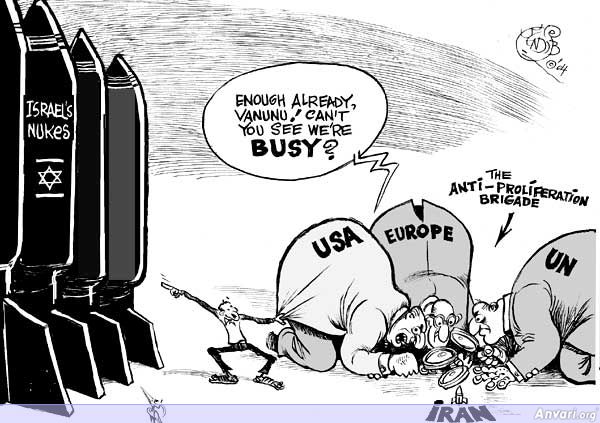 |
| Iran is not the only country that is going rogue with a nuclear program. No wonder it feels insecure when Israel and Pakistan - both US allies - posses an arsenal. |
Isn't Iran entitled to a nuclear arsenal? I'm talking about the legal entitlement here, not about the moral or humanitarian sides of the question. For this I wish to refer to the opinion on the legality of the threat or use of nuclear weapons. This statement by the International Court of Justice was to answer whether a state may use a nuclear attack or threaten to do so. The advice stated that there is no prohibition on the use of nuclear arms as such, but it would be in conflict with humanitarian law. So did the Court really rule that nukes are out of the question? Not exactly as the advice left a loophole: the Court felt that it 'cannot conclude definitely whether the treat or use of nuclear weapons would be lawful or unlawful in an extreme circumstance of self-defence'. So if a the existence of a state were at stake, the use of nuclear arms might be permitted.
In its finality this opinion is inconclusive on the use of nuclear force. In it the Court also recognized that there is no evidence for or against the legal possession of nuclear arms, thus actually allowing the continuous possession of nuclear devices. Iran is however a signatory member of the Non-Proliferation Treaty and thus committed itself to a prohibition on developing its own nuclear arsenal. This is probably the main reason Iran keeps denying that its nuclear program has a military branch; heavily sanctions might follow if Iran openly admitted any violations. It is often remarked that other states - in question Israel, Pakistan and India - have nuclear arms. These are indeed contrary to the principles of non-proliferation. But then again these three nations have not signed the above mentioned treaty. You may well consider them to be 'rogue nations' for this (I do) but fact is that they follow the rules.
HOW NOT DO DEAL WITH IRAN
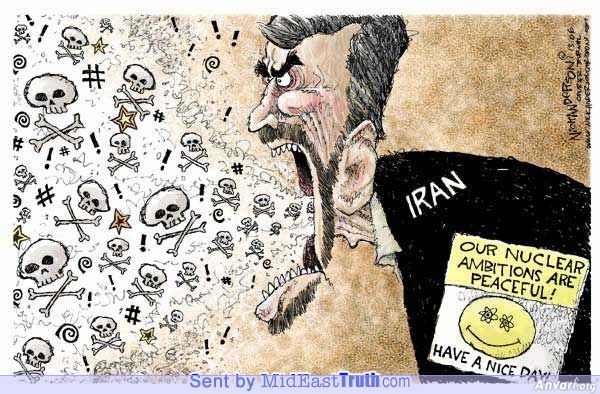 |
| Iran remains that its nuclear program doesn't serve military ends. That statement is likely untrue, though I do believe that Iran is building nuclear arms for defensive reasons. |
Up till today international reaction vis-a-vis the Iranian nuclear aspirations carried a certain degree of machismo. The United States, and even more fiercely Israel, have been talking about unilateral military measures. Such action is not bound to the realm of fiction: Israel acted against key facilities in the nuclear programs of Iraq (1981) and Syria (2007) before. The strategy applied against Iran is supplemented with assaults on nuclear scientists and economic pressure. The latter in the form of an embargo on Iranian oil, currently upheld by the United States and the European Union. It is my opinion that the path pursued is in its entirety a mistake. For starters the aggressive talk and action only endorse the radical voices in Iran, claiming that the West is pressuring the country toward regime change. A second setback is that the embargo will hit the people of Iran hard. If hardship for the masses is our idea of creating justice I pass for it. Not only is using this impoverishment-strategy interference with Iran's internal affairs, it is ethically most questionable too.
My feel is that Iran should not build a nuclear weapon or talk about closing of the Strait of Hormuz, the West needs to understand that aggression invokes aggression. That is the mechanism behind the security dilemma. Maybe Iran can send a message by collaborating with its fellow members at OPEC. Economic and political affirmation of the Middle East as a region in its own right would force us to rethink our strategy. And rethinking is needed. Iran certainly made some bad choices concerning its methods in the past, but its concerns are valid. As a regional power it is entitled to secure and manifest itself as long as it does not violate the rights of others.
